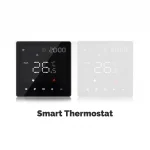


by NOVA

7 月 21, 2026
IR remote control hub requests usually arrive as one line in a project brief: “add remote control for the TVs and air conditioners.” A quotable specification needs much more than that sentence. This guide shows integrators how to turn appliance lists, room layouts, and network surveys into a bounded hub order, using only evidence that the MOES public catalog actually supports.

Catalog image of the MOES universal remote controller; confirm exact scope per project before quoting.
An IR remote control hub replaces handheld infrared remotes with app or scene control. The device sits in a room, joins the property network, and re-transmits infrared commands to appliances such as televisions and air conditioners. Integrators should treat it as a convenience layer, not as switching hardware: circuits, motors, and safety functions stay with switches, modules, and breakers.
Terminology needs to be fixed early because buyers mix three names for the same request. “IR blaster,” “universal remote,” and “IR hub” all describe an infrared transmitter with a network radio. Write one term into the project documents and keep it consistent through the RFQ, the BOM, and the handover manual.
Start with a room-by-room appliance inventory rather than a hub count. Each row should record the appliance type, brand, model, and its position relative to a possible emitter location. Infrared control needs an unobstructed signal path within the room, so cabinet doors, alcoves, and pillar shadows belong in the survey notes.
| Inventory field | Why it matters | Typical source |
|---|---|---|
| Appliance brand and model | Code library coverage must be confirmed per model | Client asset list |
| Room dimensions and obstructions | One emitter position per enclosed space | Site survey |
| Mounting surface and power point | Hub placement and cabling | Site survey |
| WLAN signal at emitter position | Network join reliability | Wireless survey |
| Control owner (app account) | Commissioning and handover | Client IT contact |
Skip this table and the project inherits guesswork. A missing model number is the single most common reason an appliance later refuses a stored code set, and that failure surfaces after handover, when correction is most expensive.
The verified MOES catalog includes a WiFi RF IR universal remote controller whose listing title states WiFi, RF, and IR control for TV and air-conditioning use. That title-level wording is the boundary of what a quote may claim without further documents. Range figures, brand code counts, and simultaneous-device limits are not part of the title, so they must be requested from the supplier in writing.
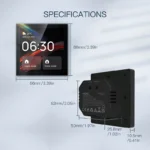
A second relevant listing is the MOES 3.5-inch smart control panel, whose title includes IR remote control alongside relays and a built-in hub. Treat it as a wall-panel SKU with an IR feature, not as a standalone blaster. The public catalog does not show a verified multi-room IR repeater system, and a quotation must not invent one.
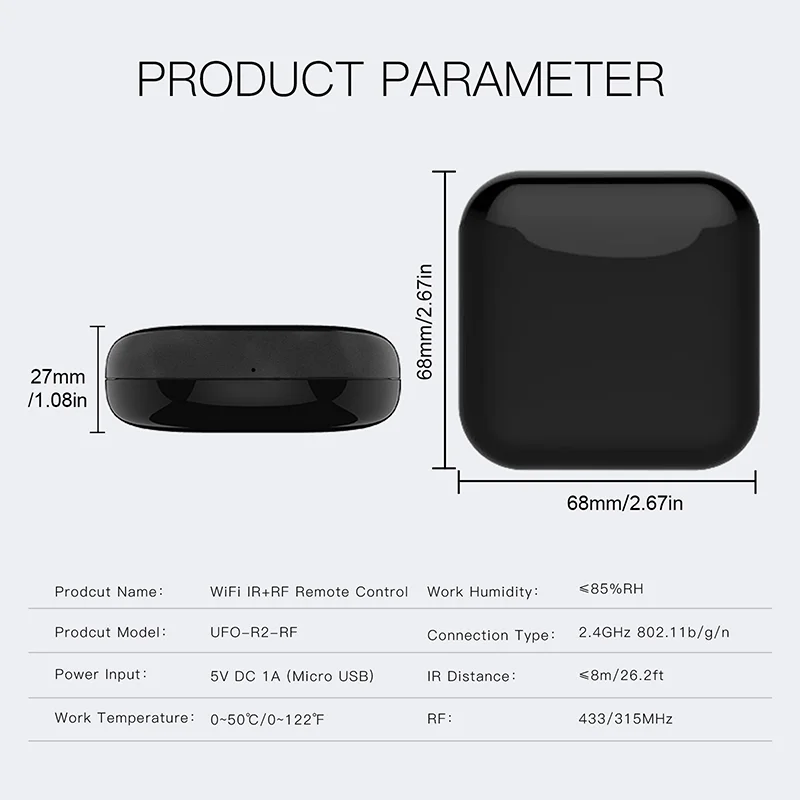
Placement-planning illustration from the MOES catalog; one emitter position per enclosed space is the working rule.
Three radio and signal paths appear in the listing title, and each carries a different duty in the system design. Planning them separately prevents the most common integration surprises.
| Path | Duty in the project | Planning input |
|---|---|---|
| WiFi | Joins the property WLAN for app and scene control | SSID coverage survey at each hub position |
| RF | Reaches compatible radio-controlled devices | Exact frequency and pairing confirmation via RFQ |
| IR | Sends line-of-sight commands to appliances | Room survey and emitter placement |
Network questions deserve the same rigor as placement questions. Record which WLAN the hubs will join, who owns the router, and how the Tuya-based commissioning account will be handed over. For projects that already run Zigbee devices, the hub does not replace a coordinator; the comparison in our Bluetooth Mesh gateway versus Zigbee hub guide explains why those roles stay separate.
For room-level appliance control in a Tuya-based project, the WiFi RF IR universal remote controller listing is the appropriate bounded recommendation. The quote should cite its title wording, attach the appliance inventory, and list every capability that still needs supplier confirmation.
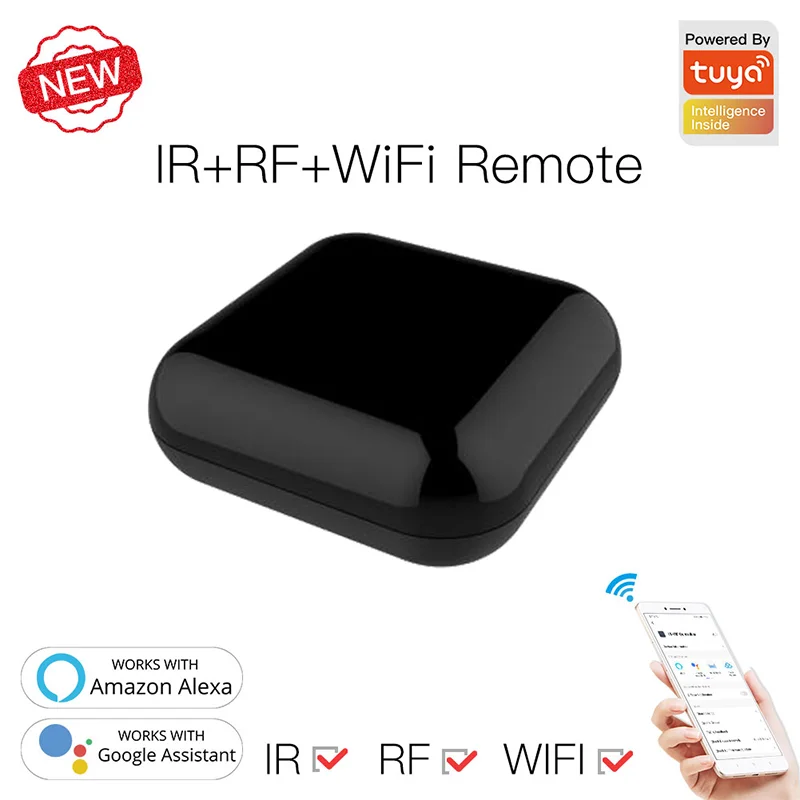
Product image from the MOES catalog; capabilities beyond the listing title require written supplier confirmation.
Why not the control panel instead? The 3.5-inch panel suits rooms that also need relay switching and a wall-mounted interface, and it should be sized as a panel project with its own wiring plan. Substituting it for a plug-in blaster changes the electrical scope, the install labor, and the handover documentation, so the two SKUs should never share one RFQ line.
Pause the order when any appliance model number is missing, when a room lacks a workable emitter position, or when the WLAN survey shows dead zones at planned hub locations. Requests that bundle appliance control with circuit switching should be split into two quote lines, because the hardware, wiring responsibility, and risk profiles differ.
Also split orders across phases when the client cannot freeze the appliance list. Hotels replacing televisions floor by floor are the classic case: quote the hubs per completed floor, and hold spares for the phases still in flux. A paused or split order costs days; a wrong bulk order costs the margin of the entire line.
Send the package through Contact Us, or open the OEM/ODM channel for branded programs. Wider device planning for the same projects is covered in the Zigbee gateway buyer’s guide and the smart home control panel buyer’s guide, both of which pair naturally with hub line items in the other smart devices range.
Yes. Infrared commands travel as light, so the emitter needs an unobstructed path within the room. Survey cabinets, alcoves, and shadows before fixing the hub position.
Plan one emitter position per enclosed space. Walls and doors block infrared, so multi-room coverage claims should never enter a quote without written supplier confirmation.
The listing title states WiFi, RF, and IR paths. Exact RF frequency, pairing method, and compatible device families still require confirmation through the RFQ.
Record the SSID coverage at each planned hub position, router ownership, the commissioning app account, and who holds handover responsibility after the project closes.
Hold a small spare percentage per phase and store it with the client’s facilities team. Spares protect the schedule when an appliance swap or room change appears mid-project.
Quantities per phase, target market and labeling, packaging, sample requirements, delivery schedule, and any OEM or ODM branding scope.

OTHER SMART DEVICES
6 月 13,2026
OTHER SMART DEVICES
6 月 12,2026
OTHER SMART DEVICES
6 月 12,2026
 +86 137 3639 3028