

by NOVA

7 月 27, 2026
Smart curtain robot demand comes from a real pain point: households want motorised curtains without replacing rods, tracks, or fabric. Dealers feel that pull and ask what to stock. The honest answer starts with the catalog — the MOES public listings verify a WiFi DIY motorised track system and a curtain switch module today, while a rod-mounted robot SKU is an RFQ question. This guide shows how to qualify the demand, quote the verified paths, and keep the robot conversation factual.

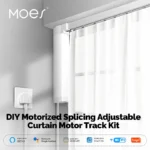
MOES catalog image from the motorised track family; rod-mounted robot SKUs are confirmed through RFQ.
A curtain robot is a battery device that clips onto an existing rod and drives the fabric by gripping it, while a motorised track system replaces the rail itself with a powered one. The robot promises minimal installation; the track promises consistent mechanics. Between them sits a third path most buyers forget: a control module wired to a motor the household already owns.
Sales conversations go faster when the three paths are named up front. Each answers a different household — the renter who cannot drill, the renovator who can, and the owner of an existing electric system that just needs smart control.
Rod geometry decides robot feasibility more than any spec sheet. Round rods, square rails, U-shaped tracks, and I-profile tracks each carry different clamp requirements, and pleat style changes how fabric bunches under a gripping wheel.
| Retrofit detail | Question it answers | Collection method |
|---|---|---|
| Rod or track profile and diameter | Which device families can mount at all | Photo with a ruler in frame |
| Curtain weight and pleat style | Drive load and grip behaviour | Fabric label or weighing |
| Window width and stack space | Travel distance and park position | Tape measurement |
| Power at the window | Charging cycle or wired option | Site photo |
| Occupant type | Renter versus owner installation limits | Sales interview |
Dealers who make this table a mandatory pre-order step cut returns dramatically. The most common return reason in this category is a clamp that never fitted the rod in the first place.
Verified evidence covers two retrofit paths. The MOES Smart WiFi DIY motorised curtain tracks listing states a DIY electric motorised track system in its title. The WiFi mini curtain switch module listing states control of roller blinds, shutters, and curtains for an existing electric motor.
No rod-mounted curtain robot SKU was verified in a public catalog search at the time of writing. Say so in the quote. A dealer who states the boundary and offers the two verified paths keeps credibility; one who improvises a robot listing from a category photo inherits the returns.
Position by household, not by gadget appeal. The track system suits owners planning a renovation window; the module suits existing motorised systems; the robot — once a SKU is confirmed — serves renters and no-drill cases. All three land in the same Tuya-based app ecosystem for control, so the app story stays consistent across the line.
| Retrofit path | Best-fit household | Evidence status today |
|---|---|---|
| Motorised track system | Owners accepting rail replacement | Verified WiFi listing title |
| Curtain switch module | Homes with an existing electric motor | Verified listing title |
| Rod-mounted robot | Renters and no-drill cases | RFQ item, not yet verified |

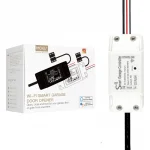
Module-path illustration from the MOES catalog; homes with existing motors need control, not new mechanics.
Network positioning matters for support costs. WiFi devices join the household WLAN under Wi-Fi Alliance ecosystem rules, which is simple for single homes; larger properties often already run coordinator-led meshes, a split explained in our WiFi versus Zigbee distributor comparison. Wall-panel and scene integration follows the patterns in the smart home control panel buyer’s guide.
The bounded dealer recommendation today is the MOES Smart WiFi DIY motorised curtain tracks listing. Its title-level scope — a DIY electric motorised track system — matches the retrofit promise buyers actually ask for, and it can be demonstrated, stocked, and supported now.

Product image from the MOES catalog; track lengths, splice parts, and motor details are datasheet items for the RFQ.
The curtain switch module stays the second line, quoted where a motor already exists. Both recommendations leave the robot question open honestly: it enters the RFQ as a requested SKU with rod-compatibility, battery, and noise questions attached, following the same evidence discipline as the Tuya smart home planning guide.
Pause stock commitments when rod photos are missing, when the demand sample is one enthusiastic customer rather than a measured segment, or when the requested robot SKU has no written supplier confirmation. Battery-driven grip devices also deserve a demo period before volume orders — charging cycles and noise are exactly the attributes a listing title cannot prove.
Retail channels should pause bundle plans too if the demo unit budget is zero. This category sells on motion; a working track demo in the showroom moves more units than any spec sheet, and the demo cost belongs in the first order’s arithmetic.
Send the package through Contact Us or the OEM/ODM channel, and keep the whole retrofit line inside the other smart devices range for consolidated ordering.
A public catalog search did not verify a rod-mounted robot SKU at the time of writing. The verified retrofit paths are the motorised track system and the curtain switch module; the robot enters the RFQ as a requested SKU.
A rod or track photo with a ruler in frame, curtain weight and pleat style, window width, and whether the occupant can drill. Those inputs decide feasibility before any brand talk.
Often yes, because the fabric hangs from new carriers — but hook spacing and pleat style must be checked per window, and the DIY title wording still leaves measurement work with the installer.
WiFi-titled SKUs join the household WLAN directly and use the Tuya app path. Projects running coordinator-led meshes should plan protocols deliberately per line item.
Budget at least one working track demo per showroom and sample units for installer training. Motion sells this category, and demo costs belong in first-order pricing.
Quantities per phase, spares, samples, demo units, target market and labeling, packaging, manual language, delivery schedule, and any OEM or ODM branding scope.

OTHER SMART DEVICES
6 月 13,2026
OTHER SMART DEVICES
6 月 12,2026
OTHER SMART DEVICES
6 月 12,2026
 +86 137 3639 3028