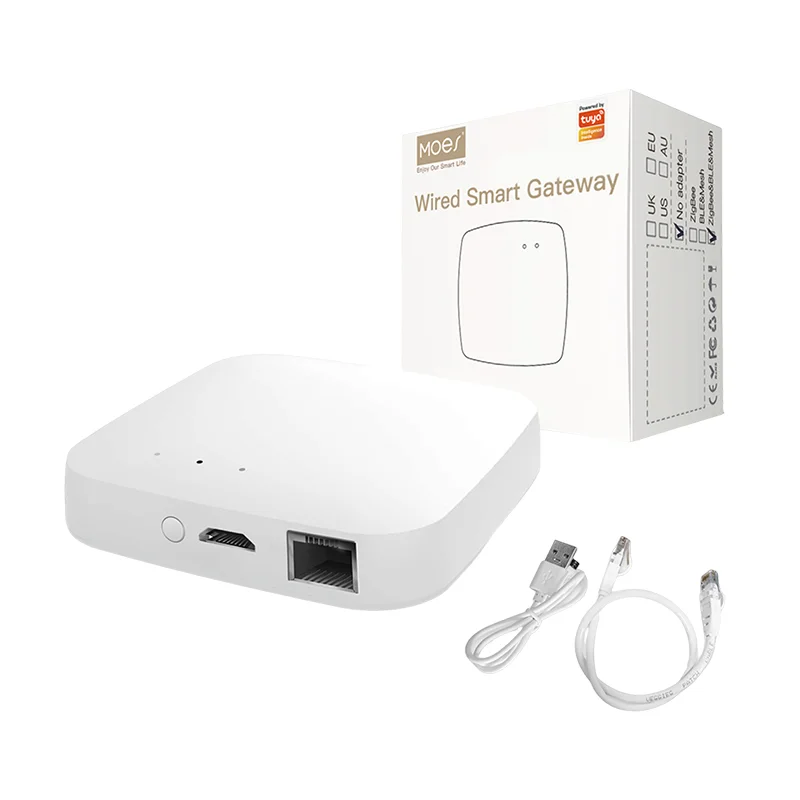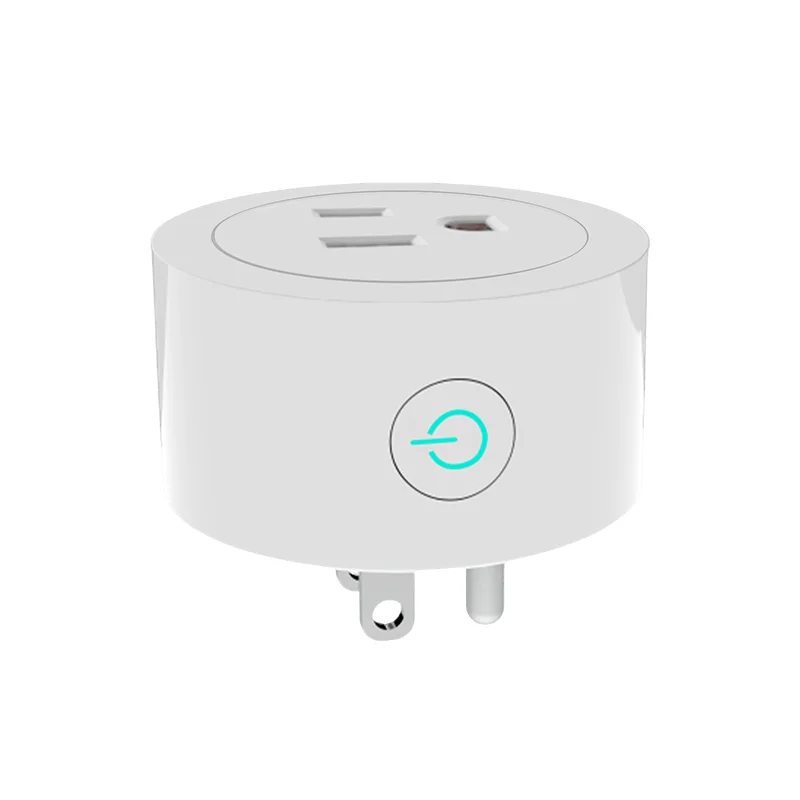


For B2B buyers, this product category is more than a consumer smart home accessory. It is a scalable product opportunity for smart home brands, electrical importers, lighting distributors, building material wholesalers, project contractors, real estate developers, and OEM/ODM product managers. Demand is being supported by the wider adoption of WiFi, Zigbee, Bluetooth, Thread, Matter, Amazon Alexa, Google Home, Apple HomeKit, Tuya Smart, and Smart Life ecosystems.
At the same time, sourcing a smart light switch requires careful technical evaluation. Buyers need to consider wiring compatibility, wireless stability, certification requirements, load capacity, app ecosystem support, installation safety, product lifespan, packaging customization, and long-term supply consistency. Understanding how smart switches are designed, manufactured, tested, and customized can help buyers reduce procurement risk and build more competitive product lines.
Technical Review Note:
This article is prepared based on smart switch manufacturing practices, including product specification review, PCBA assembly, firmware verification, quality control, compliance planning, and OEM/ODM project communication.
Market Insight: Smart Lighting Control Is Becoming a Standard Home Upgrade
Smart lighting control is moving from a premium smart home feature into a common residential upgrade. Homeowners are no longer only concerned with switching lights on and off. They increasingly expect lighting systems to support convenience, automation, energy management, and integration with other connected devices.
A smart light switch meets these expectations without requiring users to replace every bulb or redesign the entire lighting system. It can be installed in familiar wall switch positions while enabling remote control, timer settings, voice commands, scene automation, and multi-device linkage.
According to the International Energy Agency, buildings account for around 30% of global final energy consumption. This makes energy efficiency, automation, and intelligent control important topics in residential and commercial building improvement. For lighting products, connected control can support more efficient daily use by reducing unnecessary operation and improving user control habits.
For B2B buyers, the market value is clear. WiFi smart light switches are often suitable for simple residential use because they do not usually require a hub. Zigbee smart wall switches are widely used in gateway-based smart home systems. Matter smart switches are gaining attention because they support stronger cross-platform interoperability.
Note: In B2B sourcing, “smart compatibility” should be verified by exact protocol, firmware version, app platform, gateway requirement, and certification scope. Product descriptions alone may not confirm real-world compatibility.
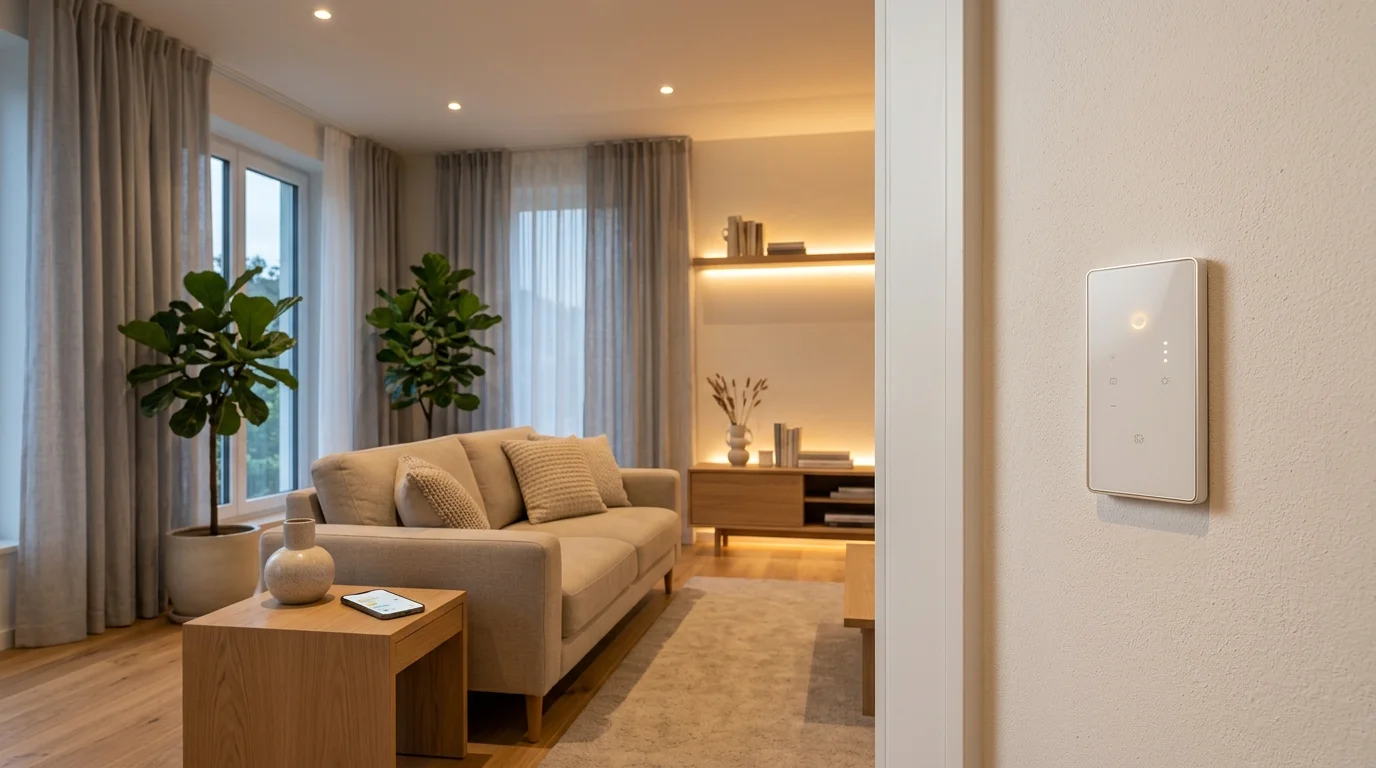
What Is a Smart Light Switch and Where Is It Used?
A smart light switch is a wall-mounted electrical switch that controls lighting through both physical operation and digital connectivity. Compared with a traditional switch, it may support mobile app control, voice assistant integration, timer settings, automation scenes, remote access, status feedback, and in some models, dimming or energy monitoring.
Common communication technologies include WiFi, Zigbee, Bluetooth, Thread, and Matter. Depending on the product design and certification route, smart switches may work with platforms such as Tuya Smart, Smart Life, Amazon Alexa, Google Home, and Apple HomeKit.
Smart light switches are widely used in residential homes, apartments, villas, hotels, offices, assisted living spaces, smart home showrooms, and real estate projects. Each application scenario has different priorities. Homeowners usually value simple installation, stable app connection, attractive design, and voice control. Project buyers often care more about batch consistency, wall box compatibility, documentation, certification, installation efficiency, and delivery reliability.
Two buyer scenarios are especially important:
- Residential and retail buyers focus on usability.
For consumer channels, buyers usually need easy pairing, clear manuals, stable app operation, voice control support, and compatibility with common LED lighting loads. - Project and wholesale buyers focus on standardization.
For hotels, apartments, and real estate projects, buyers often evaluate product uniformity, installation workflow, certification documents, supply planning, and after-sales support.
This difference explains why the same smart light switch may perform well in one market but require adjustment for another. Regional wiring standards, wall box dimensions, user habits, voltage ratings, and certification expectations should all be reviewed before bulk sourcing.
Key Product Specifications B2B Buyers Should Confirm
Before starting a smart light switch sourcing project, buyers should define technical specifications clearly. A well-prepared specification sheet helps reduce sampling delays, quotation misunderstandings, certification risks, and installation problems.
| Specification | Common Options | Buyer Consideration |
|---|---|---|
| Rated Voltage | 100–240V AC, 110V, 220V | Match target market electrical standards |
| Rated Current | 5A, 10A, 15A, 16A | Confirm lighting load and safety margin |
| Wiring Type | Neutral required, no-neutral | Critical for retrofit homes |
| Communication Protocol | WiFi, Zigbee, Bluetooth, Matter, Thread | Determines ecosystem compatibility |
| Gang Type | 1-gang, 2-gang, 3-gang, 4-gang | Must match wall box and room layout |
| Load Type | LED, incandescent, halogen, CFL | Important for switching and dimming performance |
| Panel Material | PC, tempered glass, ABS | Affects durability, safety, and appearance |
| Certification | CE, RoHS, FCC, ETL, UL, UKCA, SAA | Required for import and retail compliance |
Buyers should avoid selecting products only by appearance or unit price. Internal design details such as relay capacity, PCB layout, terminal structure, wireless module stability, insulation spacing, flame-retardant housing, and firmware reliability can directly affect long-term performance.
For example, a no-neutral smart light switch may be useful in older residential buildings where neutral wires are not available in the switch box. However, it requires careful compatibility testing with low-wattage LED loads. A dimmer smart switch may offer a better user experience in bedrooms, living rooms, or hotels, but it must be verified with common LED drivers in the target market to reduce flickering or abnormal dimming behavior.
From Product Design to Prototype Development
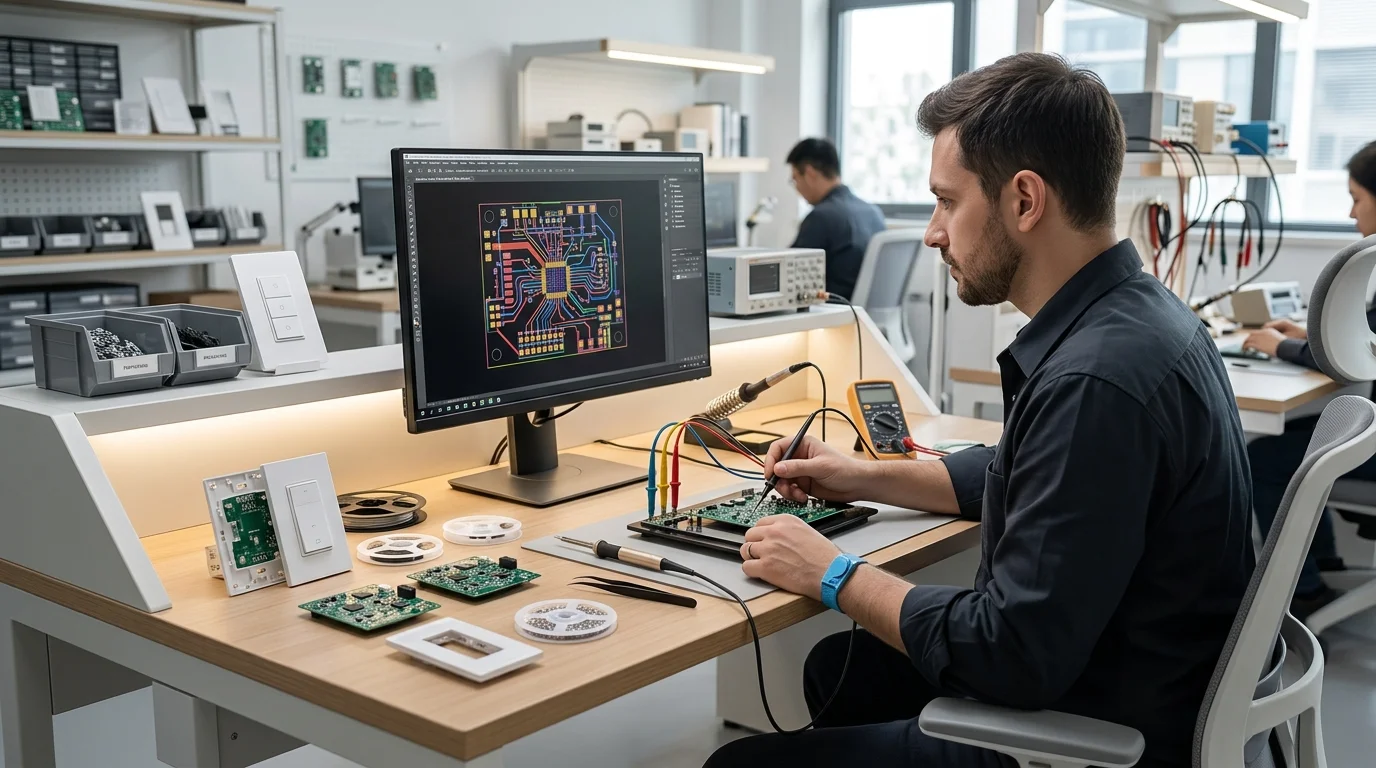
Smart light switch manufacturing usually begins with product definition and engineering development. At this stage, the manufacturer translates buyer requirements into electrical design, mechanical structure, firmware logic, and prototype samples.
The electrical design defines voltage range, rated current, wiring method, relay selection, protection circuit, wireless module, MCU control, and PCB layout. Because the product is connected to household electricity, engineers need to consider insulation distance, temperature rise, surge protection, overload behavior, and long-term switching performance.
Mechanical structure design focuses on the front panel, back housing, terminal position, wall box compatibility, screw layout, button feel, and touch sensitivity. EU-type wall boxes, US-type wall boxes, and UK-type installation formats may require different dimensions and mounting designs.
Firmware and app integration are equally important. A smart switch must support stable pairing, status feedback, timer settings, scene control, reset functions, and sometimes OTA updates. If the product connects to Tuya Smart, Smart Life, Alexa, Google Home, Apple HomeKit, Zigbee gateways, or Matter ecosystems, compatibility testing should be planned early.
During prototype development, buyers should pay close attention to two areas:
- Electrical and wireless stability
Prototype samples should be tested for switching response, app pairing, relay operation, wireless connection, load control, and temperature behavior under expected installation conditions. - Installation and user experience
Buyers should review terminal markings, wall box fit, screw positions, button feedback, touch sensitivity, indicator lights, manual clarity, and packaging information before approving mass production.
In practical factory evaluation, buyers often review sample test records, PCBA inspection results, aging test conditions, and packaging verification documents before confirming a bulk order. This early review process reduces the risk of discovering major issues after tooling, certification, or mass production has started.
Material Selection and Component Sourcing
Material and component selection has a direct impact on safety, lifespan, wireless stability, and user experience. Although a smart light switch may look simple from the outside, its reliability depends on a combination of electronic, mechanical, and software elements.
A responsible manufacturer should be able to explain material selection based on safety requirements, thermal performance, certification needs, and target market positioning. Common materials and components include flame-retardant PC housing, tempered glass or PC front panel, copper conductive parts, terminal blocks, relays, wireless modules, PCB substrates, capacitors, resistors, and surge protection components.
The relay should match the rated load and expected switching frequency. The PCB should support stable power conversion, signal transmission, insulation spacing, and heat dissipation. Wireless modules should be selected according to the target ecosystem, such as WiFi for standalone residential use, Zigbee for gateway-based systems, or Matter for broader interoperability.
Note: For private-label or customized projects, changing the wireless module, relay model, housing material, PCB layout, or firmware may affect the original certification scope. Buyers should confirm certification validity before approving design changes.
In supplier evaluation, company background can provide useful context when it is connected to measurable manufacturing resources. For example, manufacturers with long-term experience in energy electronics, SMT production, testing fixtures, and OEM/ODM project management are often better positioned to support smart switch development. NOVA’s public information shows experience in solar energy and smart home IoT products, including Matter, Zigbee, and WiFi smart devices.
Smart Light Switch Manufacturing Process
A typical smart light switch production process includes incoming material inspection, SMT assembly, PCBA verification, firmware programming, structural assembly, functional testing, aging verification, and outgoing inspection. Each step is designed to reduce production variation and improve batch consistency.
The process usually starts with material inspection. Plastic housings, panels, PCBs, relays, terminals, wireless modules, labels, manuals, and packaging materials are checked before entering production. This helps prevent defective or mismatched components from affecting later assembly.
During SMT and PCBA preparation, electronic components are mounted onto the PCB through automated production equipment. After soldering, the PCBA is checked for solder quality, missing components, polarity errors, and circuit issues. For smart switches, PCBA consistency is critical because even small variations can affect wireless stability, power conversion, relay operation, or app response.
Firmware programming follows. The MCU or wireless module receives the required firmware, allowing the product to support app pairing, remote control, timing, scene linkage, reset behavior, and status feedback. After programming, the board must be verified before final assembly.
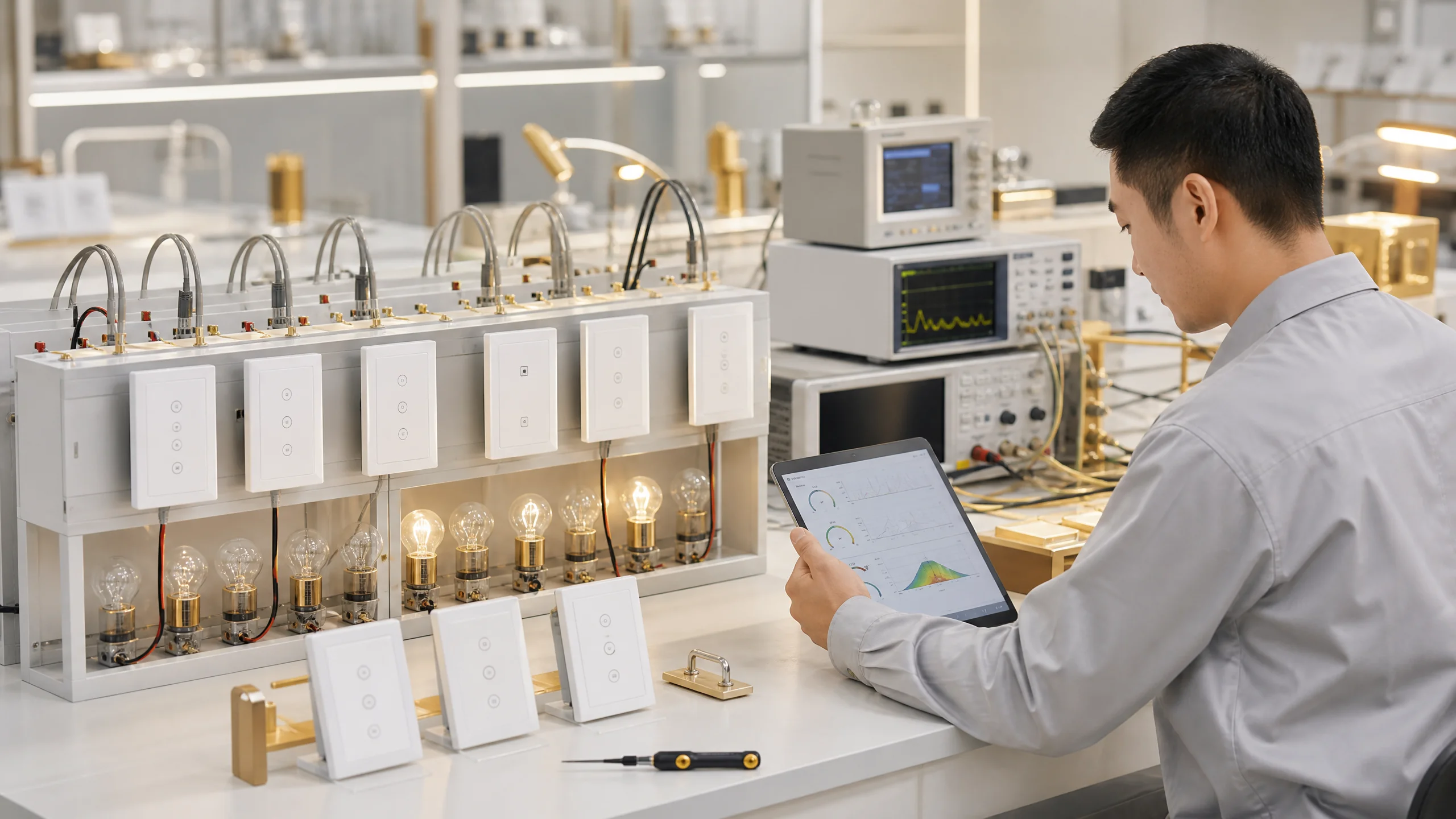
The final assembly stage combines the PCBA, terminals, buttons, touch panel or mechanical panel, frame, and back housing. Products are then tested for power control, button response, app connection, wireless response, indicator behavior, and load operation. Aging verification is used to identify early instability before shipment, while outgoing inspection confirms appearance, labels, manuals, accessories, barcodes, packaging, and carton markings.
This manufacturing flow matters to B2B buyers because it directly affects batch consistency, after-sales pressure, and product reputation in the market.
Quality Assurance and Compliance Testing
Quality assurance is especially important for smart light switches because the product is installed inside a wall and connected to household electricity. A structured QA system can reduce safety risks, installation complaints, returns, and warranty costs.
A typical quality management process includes incoming quality control for materials, in-process monitoring during SMT and assembly, functional testing after firmware programming, load and aging verification, and outgoing quality control before shipment. Depending on the target market and product configuration, compliance testing may involve high-voltage withstand evaluation, insulation resistance measurement, temperature rise review, EMC and RF performance assessment, flame-retardant material verification, mechanical durability review, and packaging reliability checks.
Electrical safety and electromagnetic compatibility requirements are often guided by regional standards and certification bodies such as IEC, UL Solutions, FCC, and the European Commission’s CE framework. For wireless smart switches, RF compliance is also important because the product communicates through radio frequency technologies such as WiFi, Zigbee, Bluetooth, Thread, or Matter.
Certification requirements vary by market. CE and RoHS are commonly associated with the European market, FCC is relevant for radio frequency devices in the United States, UL or ETL may be required for North American electrical safety expectations, UKCA applies to the United Kingdom, and SAA is often considered for Australia.
The key point for buyers is that certification should be matched to the exact product model, electrical structure, wireless module, and market destination. A similar-looking product may not share the same certification coverage.
For manufacturers, maintaining organized testing fixtures, production tools, inspection records, and standardized quality procedures helps improve workflow consistency. For buyers, these records can provide useful evidence when evaluating whether a smart light switch supplier is prepared for repeat orders and long-term cooperation.
OEM and ODM Options for Smart Light Switch Buyers
OEM and ODM services allow B2B buyers to adapt smart light switch products to their market positioning, sales channels, branding requirements, and technical needs.
OEM projects are usually based on an existing product platform. They may include logo printing, panel color adjustment, private-label packaging, multi-language manuals, barcode labels, custom carton marks, app platform selection, and basic function configuration. This approach is suitable for distributors, importers, brand owners, and online sellers that need a faster route to market.
ODM projects involve deeper development. They may include new housing design, PCBA customization, firmware development, special protocol integration, Matter or Zigbee adaptation, private app support, custom UI logic, load-specific design, or new certification planning. ODM is suitable for buyers who need product differentiation, project-based functions, or a long-term branded product line.
In practical cooperation, buyers should prepare target market information, required certifications, voltage and current requirements, wiring type, protocol preference, app ecosystem, expected order quantity, packaging requirements, and sample testing plans. This information helps manufacturers evaluate feasibility, sample lead time, tooling requirements, certification impact, and mass production scheduling.
Public company materials from Wenzhou NOVA New Energy Co., Ltd. describe OEM/ODM cooperation in areas such as configuration customization, logo and brand support, custom packaging, and technical development. For B2B buyers, such capabilities are most valuable when they are supported by clear technical communication, test documentation, and realistic delivery planning.
How to Evaluate a Smart Light Switch Manufacturer
When comparing suppliers, B2B buyers should evaluate more than unit price. Manufacturing capability, certification support, engineering communication, documentation, and supply stability often have a greater impact on long-term project success.
| Evaluation Factor | What Buyers Should Check | Why It Matters |
|---|---|---|
| Engineering Capability | Circuit design, firmware, app integration | Reduces development risk |
| Certification Support | CE, RoHS, FCC, ETL, UL, UKCA, SAA | Supports import and retail compliance |
| Quality Control | IQC, IPQC, functional testing, aging test, OQC | Improves batch consistency |
| OEM/ODM Service | Logo, packaging, firmware, structure design | Supports brand differentiation |
| Protocol Options | WiFi, Zigbee, Bluetooth, Matter, Thread | Matches different smart home ecosystems |
| Documentation | Datasheets, manuals, test reports, installation guides | Helps sales and after-sales support |
| Production Stability | Lead time, batch control, capacity planning | Reduces supply chain uncertainty |
| Export Experience | Market documents, packaging rules, shipping coordination | Improves international order execution |
A suitable manufacturer should be able to provide technical explanations, sample support, quality records, certification documents, and realistic production timelines. For buyers placing repeat orders or developing private-label products, batch traceability and communication efficiency are often as important as the initial quotation.
Company background can also provide useful context, but it should be evaluated alongside actual product data. NOVA reports more than 15 years of development, multiple branches in China, a 120,000-square-meter intelligent manufacturing base, more than 150 professional talents, and product experience across solar new energy and smart home IoT. These details are meaningful when connected to practical buyer needs such as R&D support, production consistency, global export coordination, and OEM/ODM execution.
Practical Procurement Guidance for B2B Buyers
Before requesting a quotation, buyers should define the project clearly. This reduces misunderstanding and helps suppliers provide accurate recommendations.
Buyers should confirm the target market, voltage range, rated current, wiring type, load type, required communication protocol, app ecosystem, certification needs, packaging format, manual language, sample testing plan, and expected delivery schedule.
For smart light switch projects, buyers should test samples in real installation conditions. Laboratory data is important, but field testing can reveal practical issues such as WiFi signal performance, LED flicker, wall box depth, terminal convenience, app pairing behavior, and user manual clarity.
For private-label projects, early communication with the manufacturer can help clarify technical feasibility, compliance planning, and production timelines before bulk orders are placed. This is especially important when buyers request changes to the panel design, firmware, wireless module, relay, packaging, or certification documents.
A structured procurement approach helps buyers avoid three common risks: choosing a model that does not fit local wiring conditions, using a product without valid certification coverage, and approving samples without testing real lighting loads.
Future Trends in Smart Light Switch Development
Smart light switch development is moving toward better interoperability, easier installation, stronger safety design, and more intelligent energy management.
Matter compatibility is likely to become more important as buyers seek cross-platform smart home products. Thread-based connectivity may also gain attention in ecosystem-based projects. No-neutral designs will continue to matter in retrofit markets, while improved LED compatibility will remain essential as LED lighting becomes standard in residential and commercial environments.
Energy monitoring, scene panels, AI-based automation, and integration with sensors, curtains, HVAC, and security systems may also influence future product design. For manufacturers, these trends require stronger engineering capability, protocol knowledge, component sourcing stability, and certification planning. For buyers, they create opportunities to develop more differentiated smart lighting product lines.
Conclusion
The smart light switch has become an important product category for homeowners who want convenient, efficient, and connected lighting control. For B2B buyers, it offers opportunities across retail, wholesale, smart home integration, real estate projects, and private-label channels.
Successful sourcing requires more than selecting an attractive design. Buyers should evaluate technical specifications, wiring compatibility, communication protocols, app ecosystem support, electrical safety, certification readiness, OEM/ODM options, quality assurance, and manufacturing consistency.
A reliable smart light switch manufacturer can support buyers not only with production, but also with technical documentation, compliance planning, sample testing, packaging customization, and long-term supply management. By taking a structured sourcing approach, buyers can reduce risk and develop smart lighting products that better match market expectations.
Frequently Asked Questions About Smart Light Switch Manufacturing
1. What is a smart light switch?
A smart light switch is a wall-mounted electrical switch that controls lighting through physical buttons, mobile apps, voice assistants, timers, and automation scenes. It replaces or upgrades a traditional switch while adding connected lighting functions.
2. How do I source smart light switches in bulk?
Bulk sourcing should begin with a clear specification sheet. Buyers should confirm voltage, current, wiring type, communication protocol, certification needs, packaging requirements, and target market. Sample testing should be completed before mass production approval.
3. Does a smart light switch need a neutral wire?
Some smart light switches require a neutral wire, while others are designed for no-neutral installation. Buyers should confirm the wiring conditions of their target market before selecting a model, especially for retrofit residential projects.
4. What is the difference between WiFi, Zigbee, and Matter smart light switches?
WiFi smart switches usually connect directly to a router and are easy for individual users to install. Zigbee switches typically require a gateway and are suitable for multi-device smart home systems. Matter smart switches focus on broader cross-platform compatibility.
5. What should importers check before buying smart light switches?
Importers should check certification scope, wiring compatibility, rated load, app ecosystem, RF compliance, packaging labels, instruction manuals, HS code requirements, and supplier quality records. These factors affect customs clearance, retail sales, and after-sales performance.
6. Can smart light switches be customized for private-label brands?
Yes. Common customization options include logo printing, panel color, packaging design, manuals, barcode labels, app platform selection, firmware configuration, and protocol options. More advanced ODM projects may require new PCBA design, housing development, or certification planning.
7. What certifications are commonly required for smart light switches?
Common certifications may include CE, RoHS, FCC, ETL, UL, UKCA, and SAA, depending on the target market, wireless module, voltage, product structure, and sales channel. Buyers should confirm certification scope for the exact model.
8. How should B2B buyers choose a smart light switch manufacturer?
Buyers should evaluate engineering capability, certification support, quality control process, OEM/ODM service, protocol options, documentation, production capacity, export experience, and communication efficiency. A reliable supplier should support both product development and long-term delivery.
References
- International Energy Agency. Buildings
Official page: https://www.iea.org/energy-system/buildings - International Electrotechnical Commission. IEC Webstore — International Standards Search
Official standards search page: https://webstore.iec.ch/ - Federal Communications Commission. Equipment Authorization and RF Device Compliance
Official page: https://www.fcc.gov/oet/ea - European Commission. CE Marking
Official page: https://single-market-economy.ec.europa.eu/single-market/ce-marking_en - UL Solutions. Product Certification Services
Official page: https://www.ul.com/services/certification - Connectivity Standards Alliance. Matter Smart Home Standard
Official page: https://csa-iot.org/all-solutions/matter/ - Connectivity Standards Alliance. Zigbee Technology Overview
Official page: https://csa-iot.org/all-solutions/zigbee/ - Wenzhou NOVA New Energy Co., Ltd. Company and Manufacturing Information
Official website: http://doubao.wp.wzkex.com/