

by NOVA

7 月 14, 2026
Touch switch vs rocker smart switch decisions affect retrofit labor, user expectations, and which MOES SKU belongs on the purchase order. Touch faceplates replace the visible plate and use capacitive or glass panels; rocker-style sites may keep mechanical rockers and add a DIY module behind the plate. Installers should specify mechanics, wiring, and protocol before ordering.

Product image from the MOES catalog; verify variant on the listing before quoting.
Homeowners describe switches by feel—touch panel, toggle, or rocker—while distributors quote by protocol and gang count. Misalignment causes:
Start with photos of the existing plate, gang layout, and wiring class, then map to MOES listing titles.
| Dimension | Touch smart switch (faceplate) | Rocker path (module or rocker SKU) |
|---|---|---|
| Visible change | New glass/touch plate | Can retain rocker feel with module |
| Box space | Full device depth | Module fits behind plate in some retrofits |
| User learning | Tap zones, LED feedback | Familiar press action |
| Installer labor | Plate swap + wiring | May reduce finish disruption |
| Spec source | Product title + plate drawing | Module title + depth note |
From the channel: Retrofit programs separate aesthetic touch upgrades from minimal-disruption rocker retention because labor and return rates differ—not because one radio protocol is always better. — Alibaba smart wall switch configuration guide
When the property owner wants to keep rocker action, a DIY module behind the plate may fit—provided box depth, load, and protocol match the listing.
The MOES Mini DIY WiFi and RF433 smart light switch module for reset and rocker switches product title references rocker switches and 1 gang 1/2 Way scope. Treat that as a module-path candidate, not a substitute for every touch specification.

Wall switch image from the MOES catalog; compare full plate swaps vs module depth requirements on the product page.
Pair module quotes with wiring verification and the no-neutral retrofit selection guide when boxes lack neutral.
Specify touch faceplates when:
Crystal glass touch listings such as the MOES ZigBee crystal glass wall touch smart light switch document touch and neutral/no-neutral variants in the title.
| Customer ask | Installer specification | MOES listing angle |
|---|---|---|
| Touch upgrade | Glass/touch plate, gang layout | Crystal glass touch Zigbee SKU |
| Keep rockers | Module + depth check | DIY module for rocker switches title |
| Multi-gang touch | Single plate order | Match gang title on WiFi or Zigbee listing |
| 2-wire retrofit | No-neutral title variant | Zigbee no-neutral listings |
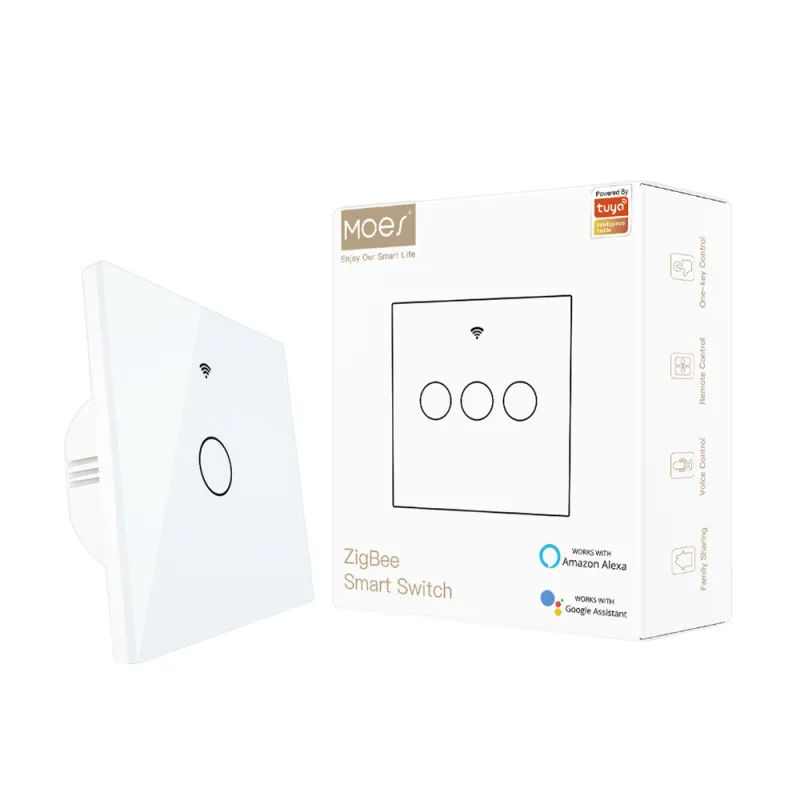
Crystal glass touch image from the MOES catalog; confirm finish and gang on the live listing.
For touch-led projects, anchor quotes on the MOES ZigBee crystal glass wall touch smart light switch listing. Link protocol planning to the WiFi vs Zigbee comparison.
Do not specify a touch plate when:
Document the decision in the RFQ so wholesalers do not swap SKUs silently.
Submit via Contact Us or discuss OEM packs on OEM/ODM.
Installers should also document LED load type when specifying touch or rocker paths because low-wattage drivers interact with standby current designs on some retrofit SKUs. Include dimmable vs on/off intent even when the customer only mentions plate style.
For multi-gang plates, capture whether all gangs on the visible plate upgrade together or only one circuit is smart-controlled. Mixed dumb/smart gangs change plate SKU and labor estimates.
Touch projects should note LED indicator and backlight expectations—glass touch listings may present feedback differently than mechanical rockers. Rocker-module paths should record whether the owner accepts a slight change in press travel.
When properties use metal faceplates or custom colors, specify finish codes early because touch glass series and standard plates may not share the same color SKU tree.
Protocol planning still follows hub BOM rules for Zigbee touch or module paths; see the wholesaler RFQ guide for volume and labeling fields that pair with installer specifications.
Document return policy triggers in the RFQ when feel preference (touch vs rocker) is the primary sale driver—mis-specified feel is a common return reason unrelated to radio performance.
Specifying a touch or rocker retrofit? Send plate photos, feel preference, and wiring notes through the MOES contact page.
Touch swaps the faceplate for capacitive/glass control; rocker paths may use modules behind existing rockers.
Some DIY module listings reference rocker switches—verify depth, load, and wiring on the product page.
When the project sells a premium finish and full plate replacement is acceptable.
Protocol and hub rules still apply—see the WiFi vs Zigbee comparison for stocking splits.
Match no-neutral title variants; see the no-neutral retrofit guide.
Plate front, gang layout, box depth for modules, and wiring presence.
OTHER SMART DEVICES
6 月 13,2026
OTHER SMART DEVICES
6 月 12,2026
OTHER SMART DEVICES
6 月 12,2026
 +86 137 3639 3028